
Netsuke – the small Japanese ornaments
What are Netsuke
Among the many forms of Japanese decorative art, netsuke occupy a particularly fascinating place. These miniature sculptures—often only a few centimetres in size—represent a unique intersection of practicality, craftsmanship, humour, and storytelling. What may appear at first glance to be simple decorative carvings were once indispensable accessories in traditional Japanese dress. Over centuries, netsuke evolved from functional objects into works of highly sophisticated art, produced by master carvers and collected worldwide.
Today, netsuke are valued not only for their aesthetic beauty but also for the cultural history they embody. Each piece offers insight into Japanese society during the Edo period (1603–1868), reflecting everyday life, mythology, humour, and spiritual beliefs.
They were used by men of the warrior class to hang on their kimonos. Since these kimonos didn’t have any pockets they had to find a solution. Nevertheless their sleeves were out of the question to be used as pocket. Instead they used inro and other vessels to function for carrying small items. These inro had cords to keep the kimono in place and at the end they used these netsuke. They basically were functioning as a counterweight, so the kimono would stay closed.
Just a small explanation. An inro is a small traditional Japanese box to hold small items.

Development of the Netsuke
As this art form developed more and more so did the netsuke. They used to be much simpler formed. The items we see now often on auctions and such were developed during the 18th century. With this development did also the forms in which they were formed.
You can see them in mythological figures like the oni we have on sale right now. Also the zodiac was used, kabuki, masks and many others. There are even which designs are quite erotic in nature.
Later in the 19th century they would become more “normal”. The designs would become more of a every day life. Since it would become more of a fashion item it would also follow more the trends of that time in art.
As fashion changed over time in Japan so did the use of netsuke. They gradually disappeared from the traditional fashion scene. Since people dressed more and more like did in the west.
As Japan began to open up more to the world people who visited Japan would start to collect them. This didn’t stop the craftsman in Japan. In contrary they continued to make them. Therefor you see quit a few of netsuke without any holes. They are more made for ornament sake then for the traditional costume.
Types of Netsuke
Katabori
The katabori is the most recognisable type.
These are three-dimensional sculptures carved in the round, representing animals, humans, deities, or mythical beings. Katabori netsuke demonstrate extraordinary craftsmanship and artistic imagination.
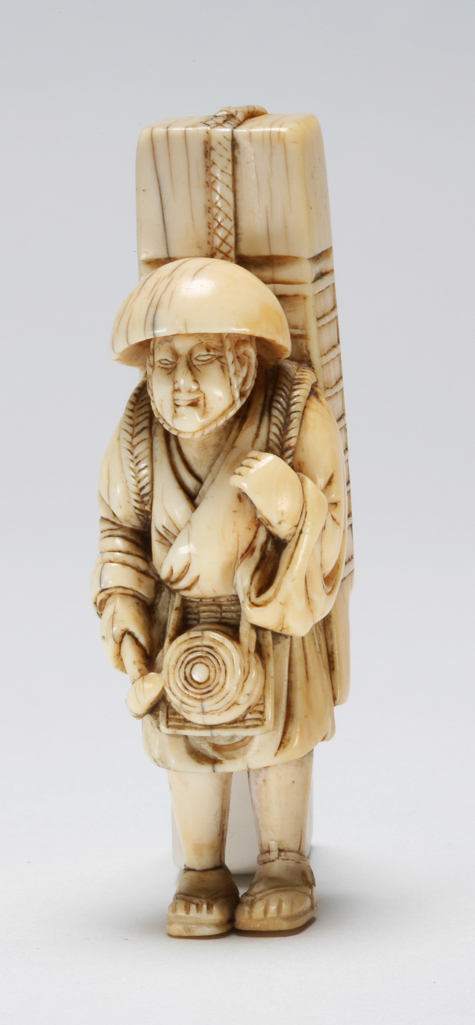
Subjects ranged from elegant animals to humorous scenes of everyday life.
Anabori
These have a hollow center.
Manju
The manju is named after a round Japanese sweet bun.These netsuke are typically flat and circular, with designs carved in relief on the surface. They were often made from ivory or lacquered wood.Manju netsuke sometimes feature highly refined decorative patterns rather than sculptural figures.
Ryusa
Ryusa feature intricate openwork carving, allowing light to pass through the design.Named after the 18th-century artist Ryusa, these netsuke are admired for their delicate and lace-like structures.Because of their complexity, they required extremely skilled carving.
kagamibuta
Metal disc on a shallow box. This lid would be decorated.
Obi-hasami Sashi
Has a length of sticks and gourds
Obi-hasami
another elongated netsuke with a curved top and bottom.
Mask
The name tells it all. This are small masks.
Trick
Any which has moving or hidden parts.
Materials used
Netsuke are often but not always made in ivory. In addition to ivory many other materials were used. Like wood, metal, clay and lacquer. Artist who would work in lacquer would besides netsuke often make inro as well.
You can find netsuke we sell in our shop . At the moment we have wooden as well as ivory netsuke. However, more will be added soon. This collection is shrinking and growing of course over time.
Here are some examples of notable collections over here.

Subjects and Symbolism
Netsuke themes are extraordinarily diverse. They reflect both high culture and everyday life.
Animals
Animals were among the most popular subjects.
Common examples include:
- Rabbits
- Rats
- Tigers
- Monkeys
- Horses
Many animals had symbolic meaning in Japanese culture.
For instance, the rat is associated with wealth and prosperity because of its connection to the rice harvest.
Mythological Creatures
Japanese mythology and folklore provided endless inspiration.
Typical figures include:
- Oni (demons)
- Tengu (mountain spirits)
- Shishi (lion-dogs)
- Dragons
These carvings often carried protective or spiritual significance.
Human Figures
Human subjects frequently portrayed characters from theatre, religion, or daily life.
Examples include:
- Travelling monks
- Fishermen
- Farmers
- Actors
- Children at play
Many netsuke include humorous elements or playful exaggerations.
Erotic Netsuke
Although less common, some netsuke depict erotic themes. These reflect the broader tradition of shunga (erotic art) in Japan. Such pieces were often discreetly humorous rather than explicit.